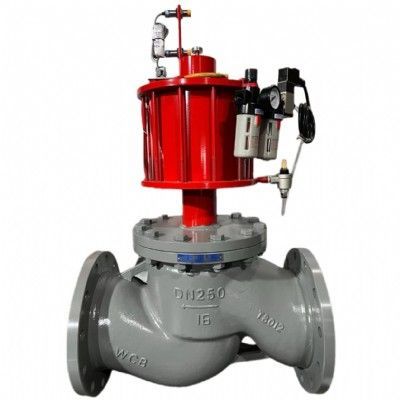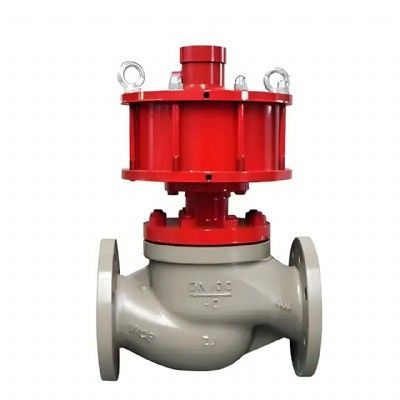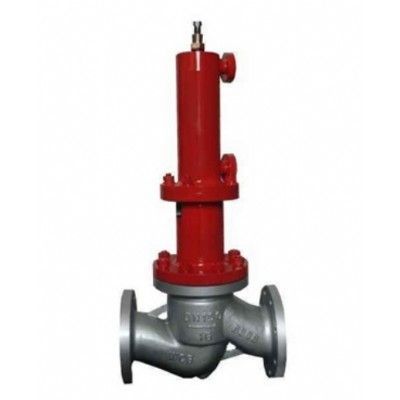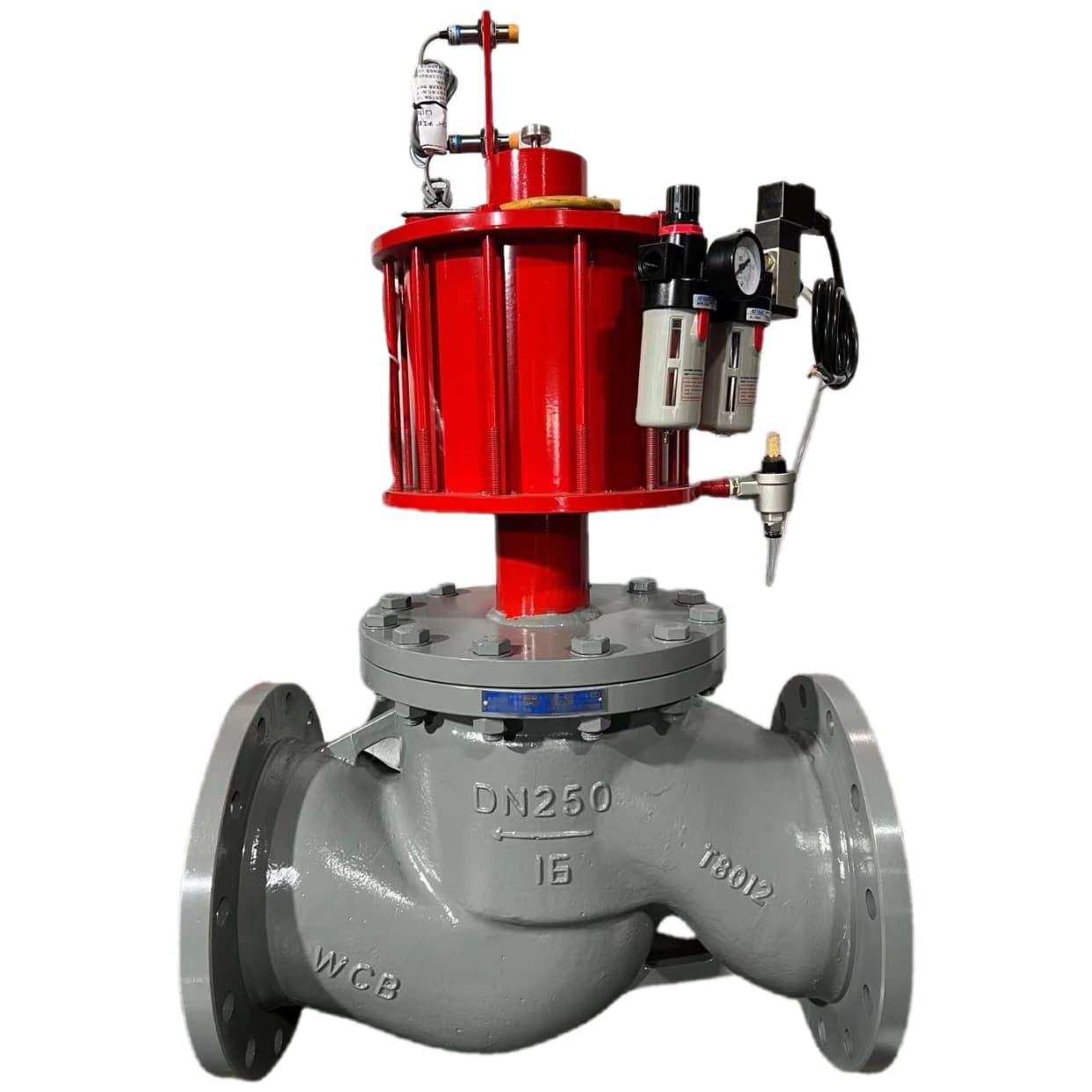
Program-controlled valves drive actuators through pneumatic or hydraulic power, and in combination with DCS/PLC control systems, realize programmed switching of gas paths. Their core working principle is to drive the valve disc through piston movement to achieve precise control of medium circulation.
Structure and Execution Principle
Program-controlled valves are composed of a valve body, an actuator (air cylinder/hydraulic cylinder), a valve, and a control system. When instrument air or hydraulic oil enters one end of the cylinder, it pushes the piston to move, driving the valve stem and valve disc to lift vertically, thereby opening or closing the medium channel. The opening and closing time of valves below DN150 is usually ≤ 2 seconds, and that of valves above DN150 is ≤ 3 seconds, which meets the requirements of high-frequency and rapid switching.
Program-controlled valves are composed of a valve body, an actuator (air cylinder/hydraulic cylinder), a valve, and a control system. When instrument air or hydraulic oil enters one end of the cylinder, it pushes the piston to move, driving the valve stem and valve disc to lift vertically, thereby opening or closing the medium channel. The opening and closing time of valves below DN150 is usually ≤ 2 seconds, and that of valves above DN150 is ≤ 3 seconds, which meets the requirements of high-frequency and rapid switching.
Control Logic Implementation
Signal interaction: The control system (DCS/PLC) sends electrical signals to the solenoid valve to trigger gas path switching.
Motion transmission: Compressed air enters the lower cavity of the cylinder through the solenoid valve to push the piston upward, and the valve is separated from the sealing surface to realize opening; when the signal is cut off, the piston moves in the reverse direction to complete closing.
Status feedback: An integrated valve position detection device transmits the switch status to the control room in real time to ensure precise matching of process sequences.
Signal interaction: The control system (DCS/PLC) sends electrical signals to the solenoid valve to trigger gas path switching.
Motion transmission: Compressed air enters the lower cavity of the cylinder through the solenoid valve to push the piston upward, and the valve is separated from the sealing surface to realize opening; when the signal is cut off, the piston moves in the reverse direction to complete closing.
Status feedback: An integrated valve position detection device transmits the switch status to the control room in real time to ensure precise matching of process sequences.
Key Technical Features
Sealing design: Adopting PEEK sealing sheets and bidirectional O-ring structure to achieve zero leakage after one million operations.
Anti-scouring optimization: The streamlined valve body and internal balance components can resist high-speed airflow scouring of 8m/s, extending the sealing life.
Adaptive adjustment: The cylinder stroke and air pressure (0.4-0.6MPa) can be adjusted to adapt to pressure requirements of different working conditions.
Sealing design: Adopting PEEK sealing sheets and bidirectional O-ring structure to achieve zero leakage after one million operations.
Anti-scouring optimization: The streamlined valve body and internal balance components can resist high-speed airflow scouring of 8m/s, extending the sealing life.
Adaptive adjustment: The cylinder stroke and air pressure (0.4-0.6MPa) can be adjusted to adapt to pressure requirements of different working conditions.